
Rockbot - Request Music
Rockbot, Inc.Music & Audio
4.24.31K Reviews
- Version
- 3.10.3
- Installs
- 500.00K
- Age Rating
- Everyone
Screenshots
Our Review of Rockbot - Request Music
 Analysis by Appyee
I approached Rockbot - Request Music as a practical music-and-audio app rather than another service for building a private library. Its central idea is simple: music plays in participating public spaces, and listeners can influence what comes next. That makes it most interesting when I am already out somewhere and want a small say in the soundtrack, not when I am sitting at home expecting a complete replacement for a personal streaming subscription.
That distinction matters. The app is free, available for Everyone, and developed by Rockbot, Inc., but its usefulness depends heavily on the venue around me. In the right place, it turns background music into something interactive. In the wrong place, it can feel limited because I am not choosing from an unlimited personal catalog whenever I want. My overall impression is that it serves a specific moment very well, provided I understand what it is designed to do.
How Rockbot feels in everyday use today
The first thing I noticed is that the experience is location-led. Instead of opening the app and immediately managing albums, playlists, or downloads for private listening, I use it to connect with the music environment around me. That changes the way I judge it. I am not asking whether it has every artist I like; I am asking whether it gives me a useful way to participate in the soundtrack of a public venue.
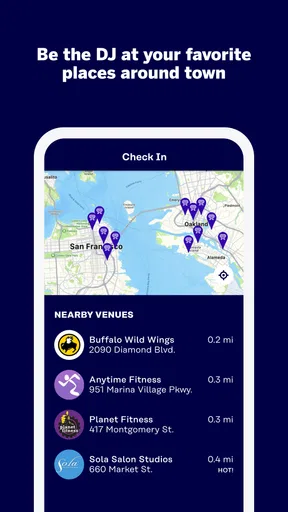
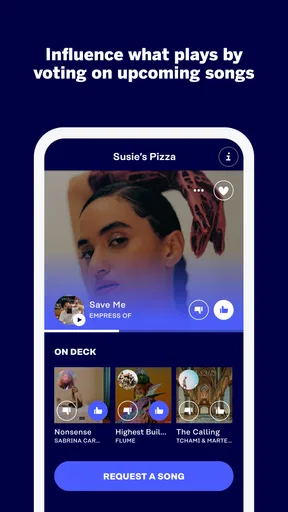
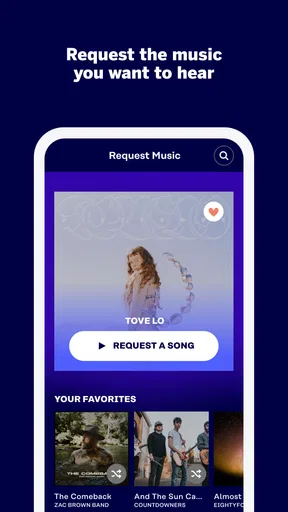
A realistic example would be spending time at a gym, restaurant, bar, or another place where Rockbot is available. I can open the app, identify the relevant music experience, browse what is available, and make a request or vote when the controls allow it. The benefit is not just hearing a familiar song. It is having a little more agency in a setting where the music would otherwise be completely out of my hands.
The app works best as a bridge between a public playlist and the people listening to it. That is a narrower role than Spotify, Apple Music, YouTube Music, or a conventional radio app, but it is also the reason Rockbot feels different. Those alternatives focus on personal listening. Rockbot focuses on shared listening, where the venue, the available catalog, and other listeners all influence the result.
I also found that the app makes more sense when I use it casually rather than constantly. I do not need to monitor it through an entire visit. A quick check, a request, and perhaps a vote are usually enough. That lightweight workflow is appealing because it does not demand the attention that a full music service can require. It is an accessory to the outing, not the main event.
Who gets the most value from it
This is a strong fit for people who enjoy having some influence over communal music. If I am the kind of listener who hears a song in a public place and thinks, “I would rather hear something else,” Rockbot offers a constructive alternative to simply accepting the playlist. It can also be fun for groups, because choosing a song becomes a small shared activity rather than a private decision made by whoever controls the speakers.
It is especially suitable for occasional users who do not need a permanent music library. Someone who visits the same type of venue regularly may appreciate being able to interact with the soundtrack without paying for another personal subscription. The free price makes trying it straightforward, and the Everyone content rating keeps the app broadly accessible.
On the other hand, I would not recommend it as the primary music app for commuting, exercising alone, traveling, or listening offline. If my priority is precise control over an entire listening session, personal playlists, saved albums, or a predictable queue, a mainstream streaming service is usually the better tool. Rockbot is valuable because it is connected to a shared place; that same connection is its biggest limitation.
The practical request-and-vote workflow
The most useful way to approach the app is to treat requests as suggestions rather than guarantees. A public music queue has its own rhythm, and the venue may be balancing many listeners at once. I would choose a song that fits the atmosphere instead of repeatedly submitting whatever I personally want. That improves the chance that the request feels appropriate to the room and avoids turning the experience into a battle between individual tastes.
There is also a social trade-off that is easy to miss. A request can affect everyone present, so the best choice is not always the most obscure favorite in my library. In a group setting, I would use the app to find common ground: a recognizable track, a style that matches the venue, or something that keeps the mood moving. That is a more effective strategy than treating the queue as a private playlist with speakers attached.
Another useful habit is checking the context before spending time browsing. If the venue’s music is already working well, I may only need to vote or leave the queue alone. If the atmosphere feels repetitive, that is when a thoughtful request has more value. The app rewards attention to the room more than endless scrolling through choices.
What the current version says about its maturity
The current version is 3.10.3, and the app has been available since February 10, 2011. That long presence gives Rockbot a different character from a newly launched audio experiment. It has had time to establish a recognizable purpose, and the current release suggests an ongoing product rather than a one-off venue tool that was abandoned after launch.
Still, I would separate that history from assumptions about major changes. A version number alone does not tell me that the latest release transformed the service, added a specific feature, or changed the listening model. What I can reasonably say is that the app has continued into a current release while keeping its central identity intact: helping people interact with music in shared spaces.
For existing users, that continuity is reassuring. Someone who already understands the venue-based concept should not need to relearn what the app is for. The experience remains focused instead of trying to become a general-purpose streaming platform. In my view, that restraint is positive, because adding too many private-library features could weaken the distinctive public interaction that makes Rockbot worth opening.
At the same time, long-running apps have to keep their basic experience comfortable for newcomers. A first-time user needs to understand quickly whether the app is useful at the place they are visiting, what action is available, and what will happen after making a request. If those answers are not immediately clear, the app can feel inactive even when the underlying service is working normally.
How it compares with ordinary music alternatives
Compared with Spotify or Apple Music, Rockbot gives me less control over the entire listening session but more relevance to a shared public environment. A personal streaming app lets me start any album, create a private queue, and move through music on my own terms. Rockbot asks me to work within a venue’s musical setting. That is a disadvantage for personal listening, but an advantage when I want my choice to become part of a communal soundtrack.
Compared with radio, Rockbot can feel more participatory. Traditional radio usually gives me no direct role in selecting what comes next, while Rockbot is built around requests and audience involvement. The trade-off is predictability: radio may provide a continuous stream without requiring me to do anything, whereas Rockbot is more rewarding when I actively engage with it.
Compared with a venue’s own playlist, the app adds a layer of feedback. I can respond to what I am hearing instead of relying entirely on staff or an automated schedule. However, it cannot solve every mismatch in taste. If the available choices do not suit the room, the app may give me influence without giving me the exact music I want. That is an important difference between participation and full control.
Where the experience can become frustrating
The largest source of friction is the dependence on the surrounding venue. At home, the app has little reason to be open. Even when I am out, its usefulness varies according to whether the place supports the service and how actively people are using it. This makes the experience less consistent than a standard streaming app, whose value travels with me from one location to another.
Requests can also create expectations that the app cannot always satisfy immediately. I may submit something I like and then wait while other choices are handled first. That is normal for a shared queue, but it can feel disappointing if I expect the app to behave like a remote control. I would approach every request as a contribution to the atmosphere, not a command sent directly to the speakers.
There is a second limitation for listeners with very specific tastes. Rockbot is not the ideal place for deep catalog exploration, private discovery, or carefully sequenced listening. Its strength is the public moment, so people who want rare recordings, uninterrupted albums, or complete ownership of the queue should look elsewhere. The app is more satisfying when I accept its boundaries rather than comparing it with services built for a different job.
The social nature can be a weakness too. A group may disagree about what belongs in the queue, and the most popular choice is not necessarily the most interesting one. I appreciate that Rockbot makes music interactive, but interaction introduces compromise. Anyone expecting their personal preference to win every time may come away frustrated even if the app is functioning exactly as intended.
Small strategies that make it more useful
I get better results by choosing the right moment to interact. If I am alone in a quiet venue, a carefully chosen request may have a noticeable effect. In a crowded place, I expect more competition and treat my selection as one voice among many. This simple adjustment prevents me from judging the app unfairly based on how quickly my choice appears.
I also recommend thinking in terms of mood rather than artist loyalty. A song that fits the current energy is more useful than a favorite that changes the atmosphere abruptly. This is one of the app’s less obvious strengths: it encourages me to read the room and make a communal choice. Used that way, a request becomes part of the experience instead of a demand for personal attention.
For repeat visitors, I would pay attention to which kinds of choices work well in that particular setting. The same request may feel right in a lively evening environment and out of place during a quieter daytime visit. Building that informal sense of context makes Rockbot more effective than opening it randomly and browsing without considering the people around me.
It is also worth keeping expectations modest about battery, attention, and time. I do not need to leave the app open throughout the visit or keep checking every minute. A short interaction is usually enough to participate. That makes it easier to enjoy the place itself rather than becoming absorbed in managing music on a phone.
What existing users and newcomers should watch
For current users, the most important thing to watch is whether the app keeps its focused identity while making the first-use experience clearer. The service does not need to imitate every feature of a personal streamer. It does need to make the path from opening the app to understanding the available venue and taking a useful action feel effortless.
For newcomers, I would watch how quickly the app becomes relevant in real life. Install it before or during a visit where the service is available, then judge it by the quality of that interaction rather than by how it behaves in isolation. If the surrounding venue is the right match, the purpose becomes obvious. If not, the app may seem sparse even though it is simply waiting for the right context.
The app’s audience size also suggests that it is not an obscure experiment. It has more than five hundred thousand installs, an average rating of 4.2 from around twelve thousand ratings, and roughly four thousand reviews. Those figures indicate meaningful public use, but they should not be read as a promise that every venue or listener will have the same experience. The local setting remains more important than the broad store presence.
Rockbot is free, and that removes the biggest barrier to testing it. I can try the experience without committing to a paid plan, then decide whether it adds anything to the places I visit. Because the minimum operating system is Android 5.0, it also remains accessible to many older Android devices. I would still treat compatibility as a practical check before relying on it for an important outing.
My recommendation after using it
Rockbot - Request Music is worth installing if I want to influence music in participating public spaces and enjoy the social side of shared listening. Its appeal is not a giant private catalog or perfect queue control. Its appeal is the small but meaningful moment when a listener can help shape the atmosphere for everyone nearby.
I would recommend it to venue regulars, groups who like choosing music together, and curious listeners who want something more interactive than ordinary radio. I would skip it as a main audio player if my routine depends on offline access, private playlists, uninterrupted albums, or complete control over every track. In those situations, a conventional streaming service is more dependable.
After years of availability and a current version of 3.10.3, the app feels like a specialized tool with a clear purpose rather than an unfinished general music platform. Its limitations are real, but they come directly from its shared, location-based design. If I use it with that expectation, keep requests considerate, and judge it by how well it improves a public listening moment, Rockbot can be a genuinely enjoyable addition to an evening out.
Verdict
Strengths of Rockbot - Request Music
- Lets users influence the music played in participating venues.
- Supports song requests directly from a mobile device.
- Can make waiting at bars, restaurants, or gyms more entertaining.
- Offers a convenient alternative to speaking with venue staff.
- Helps discover music selected by other people at the venue.
Limitations of Rockbot - Request Music
- Availability depends heavily on whether nearby venues use Rockbot.
- Some requests may be skipped or delayed by venue policies.
- The music catalog may not include every preferred artist or song.
- Features and controls can vary between participating locations.
- Background location access may raise privacy concerns for some users.
Similar Picks in This Category
View All
YouTube Music
Google LLC4.4

Samsung Music
Samsung Electronics Co., Ltd.3.8

Spotify: Music and Podcasts
Spotify AB4.3

JioSaavn - Music & Podcasts
Saavn Media Limited4.3

Lark Player:Music Player & MP3
Lark Player Studio - Music, MP3 & Video Player4.6

StarMaker: Sing Karaoke Songs
SKYWORK AI PTE. LTD.4.3
Frequently Asked Questions
What is Rockbot - Request Music and how does it work?
Rockbot - Request Music is an interactive music and entertainment platform commonly used in bars, restaurants, gyms, bowling alleys, and other public venues. After opening the app, you can identify a participating location, browse its available music library, and request songs for the venue’s playlist. The final selection and playback order are controlled by the venue and Rockbot’s rules, so a requested track is not guaranteed to play immediately.
Can I use Rockbot - Request Music anywhere, or does it require a participating venue?
The app is primarily designed for use in locations that have an active Rockbot system. It may use your location or venue search to help you find a supported business, but it will not provide the same functionality everywhere. Before downloading or purchasing credits, check whether the place you are visiting appears in the app and whether its music, karaoke, trivia, or other entertainment features are enabled.
Do I have to pay to request songs on Rockbot?
Downloading Rockbot - Request Music may be free, but some venues can require payment, credits, or in-app purchases to submit certain requests or unlock additional features. Pricing and available options can vary depending on the location and the entertainment package selected by the business. Review the request screen carefully before confirming, because payments may not be refundable if the venue skips a song or closes early.
Will my requested song definitely play, and can I choose the playback order?
No. A request is a suggestion submitted to the venue’s Rockbot playlist rather than a guarantee of playback. Staff, venue settings, song availability, content restrictions, and requests from other customers can all affect what is played and when. Some locations may allow free or paid priority requests, while others use a queue managed entirely by the venue. The app normally shows relevant status information when available.
What permissions and account information does Rockbot - Request Music need?
Rockbot may request access to information such as your approximate location, device data, and account details so it can identify nearby participating venues, process requests, and maintain your profile or purchase history. You can review permissions in your Android or iOS settings and disable location access if you prefer to search manually, although some venue-discovery features may be less convenient. Always read the current privacy policy before creating an account or making payments.
